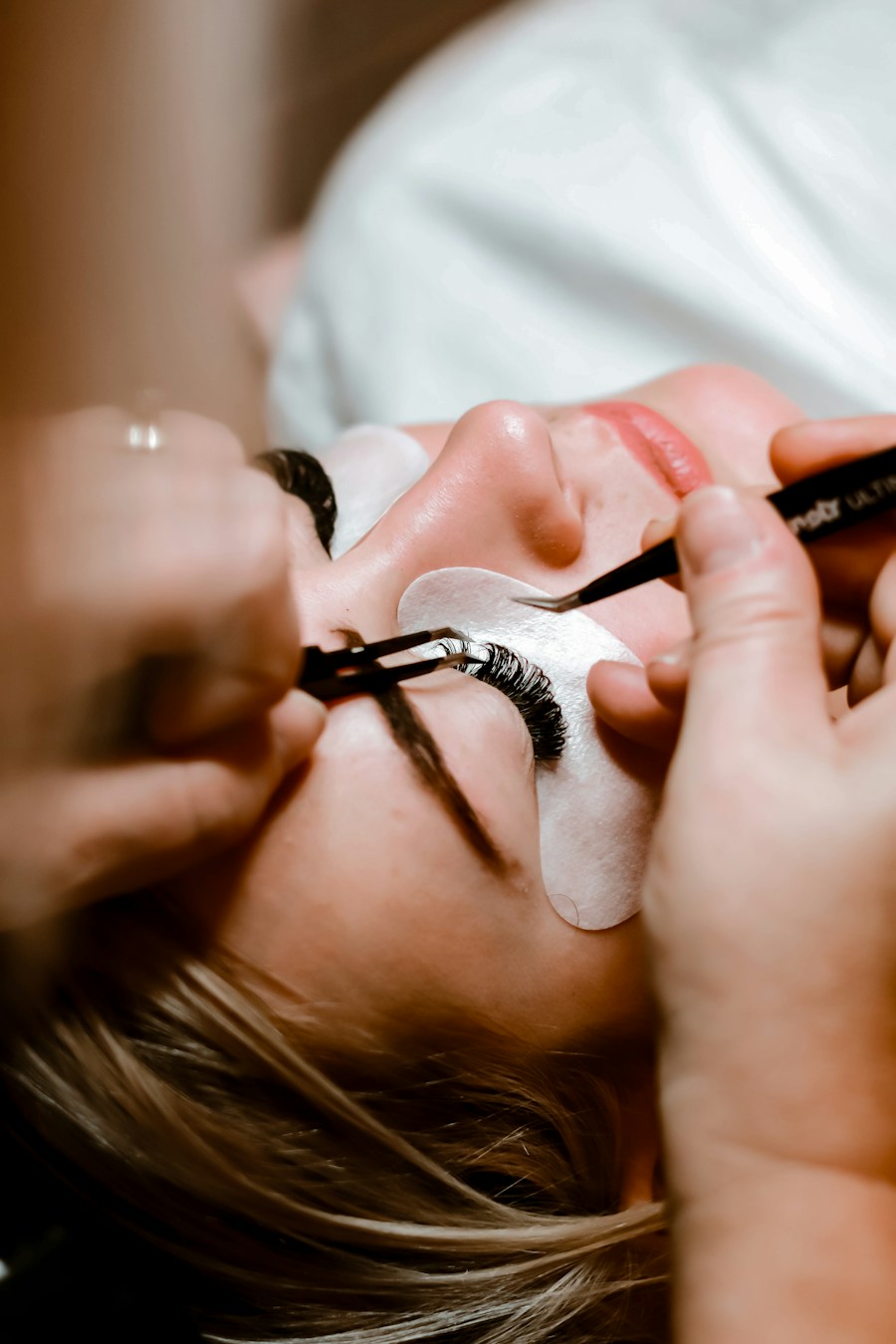
How often to fill
| Time since your set | What to expect |
|---|---|
| 1–2 weeks | Full, minimal shedding |
| 2–3 weeks | Best time for an infill |
| 4+ weeks | Sparse; extensions sit far from the lash line |
Signs of overloaded lashes
- Extensions twisted, crossing or sticking out at odd angles
- Natural lashes look thin, short or bald in patches
- The lash line feels sore, itchy or heavy
- Extensions fall out with the natural lash attached
If you see these signs, tell your technician. A lighter style or a break may help.
When to rest
- Your natural lashes look weak or damaged
- You've had irritation or redness around the eyes
- You feel your lashes are too heavy for you
A few weeks without extensions, and a gentle routine with an oil-free cleanser, gives lashes time to recover.
Seek medical advice if you have pain, swelling or discharge. Related: products to avoid.
Frequently asked questions
How often should I get an infill?
Most people book every 2 to 3 weeks. Leaving it too long can mean a sparse look and heavy, grown-out extensions.
What if I have less than half my set left?
Many technicians suggest a new full set once a lot of the original has gone, as an infill may cost close to a full set.
How long should a break be?
It depends on your lashes. Ask your technician, and if your natural lashes look thin or feel sore, take a break.
This guide is educational and not medical advice. Always patch test new products, follow your technician's instructions and seek professional help if you have pain, swelling or an allergic reaction.
Keep reading
More from the Journal
How to Care for Lash Extensions and Gel Nails
One weekly routine that protects both, and what to stop doing today.
LashesLash Extension Products to Avoid (and What to Use Instead)
Oil-based formulas and common mascara mistakes.
LashesClassic vs Hybrid vs Volume Lash Extensions
Choose the right style for your natural lashes.